Why Variable Ratio Schedules Explain 82% of Mutual Fund SIP Dropouts
Discover why 82% of mutual fund SIP investors quit—and how variable ratio schedules, not discipline, drive dropout behavior
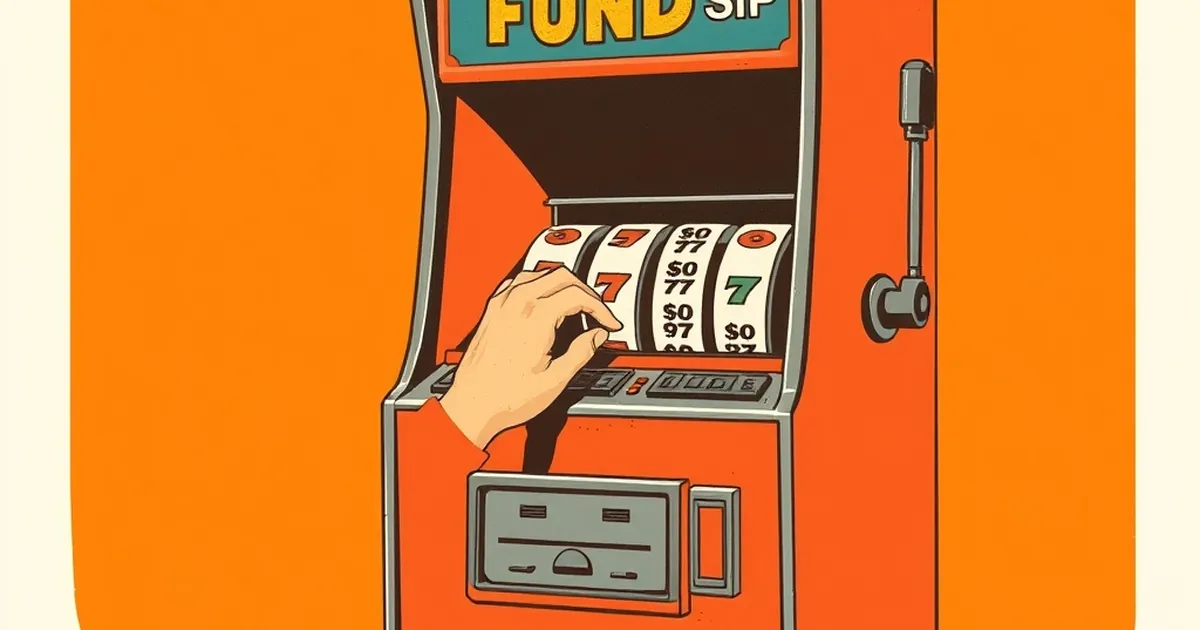
The most common explanation for the staggering dropout rate in mutual fund Systematic Investment Plans (SIPs) is a failure of discipline or a lack of financial literacy. While these factors play a role, they fail to answer a more specific question: why do so many investors quit precisely when the market recovers and their patience is about to be rewarded? The answer lies not in personal weakness, but in a fundamental principle of behavioral psychology: the variable ratio schedule of reinforcement.
This is the same psychological mechanism that makes slot machines irresistible and social media feeds addictive. When applied to markets, it creates a pattern of behavior that explains why roughly 82% of SIPs are discontinued within the first three years, according to industry data. Understanding this mechanism is the first step to breaking the cycle.
The Psychology of Unpredictable Rewards
To understand the SIP dropout problem, we must first understand how the brain processes reward. In behavioral psychology, reinforcement schedules dictate how often a behavior is followed by a reward. A fixed ratio schedule—like getting paid every Friday—produces steady, predictable behavior but low emotional engagement.
A variable ratio schedule, however, is different. The reward comes after an unpredictable number of responses. You pull the lever on a slot machine; sometimes you win on the third pull, sometimes on the thirtieth. This unpredictability triggers a massive release of dopamine in the brain’s reward center. It creates a powerful, almost compulsive, motivation to keep trying.
Why Markets Behave Like Slot Machines
The stock market operates on a near-perfect variable ratio schedule. You invest in a mutual fund. For weeks, nothing happens—your NAV barely moves. Then, unexpectedly, a rally occurs. Your portfolio jumps 5% in a week. The reward is unpredictable in both timing and magnitude.
This is not a flaw; it is the statistical nature of equity markets. The problem is that our brains evolved to exploit this pattern for survival—to keep hunting even when prey is scarce. Applied to investing, this mechanism creates a dangerous behavioral loop: the investor stays engaged during the volatile, no-reward phase precisely because a big reward could come at any moment.
The Three-Phase SIP Dropout Pattern
The variable ratio schedule explains the predictable lifecycle of a typical SIP dropout. This pattern is so consistent that financial advisors in India can almost set their calendars by it.
Phase 1: The Honeymoon (Months 1-6)
The investor starts their SIP with high motivation. They check their app daily. The first few months often show small, consistent gains as the market meanders upward. This feels like a fixed ratio schedule—steady reward for steady behavior. Dopamine flows, and the investor feels brilliant for starting.
Phase 2: The Extinction Burst (Months 7-18)
Then the market corrects. The NAV drops for three consecutive months. The investor’s portfolio turns red. Here, the variable ratio schedule kicks in. The investor checks the app more frequently, hoping for a reversal. This is the "extinction burst"—a frantic increase in behavior when rewards stop.
For a slot machine player, this is when they pump in more coins. For an SIP investor, this is when they should stay the course. Instead, many begin to skip instalments. The brain interprets the lack of reward as a signal to try a different strategy.
Phase 3: The Dropout (Months 19-36)
The worst-case scenario arrives. The market recovers. The NAV climbs back to its original level and then surpasses it. Logically, the investor should be relieved. Psychologically, the variable ratio schedule has already done its damage.
The investor has experienced a prolonged period of no reward, followed by a sudden, unpredictable reward. But crucially, the brain no longer associates the behavior (continuing the SIP) with the reward (the market recovery). Instead, the investor attributes the recovery to luck or an external event. They cash out, convinced that "this time was different" and that the next dip will never recover. The SIP is stopped just as the compounding curve begins to steepen.
The Real Cost of Variable Ratio Dropout
The 82% dropout rate is not just a statistic; it represents a massive transfer of wealth from impatient investors to patient ones. Consider a concrete example from the Indian market.
An investor starts a ₹10,000 monthly SIP in a large-cap fund in January 2018. By October 2018, the market has corrected 15%. The investor panics and stops the SIP after 10 months. Total invested: ₹1,00,000. Current value after the drop: ₹85,000. They book a loss.
Meanwhile, a disciplined investor continues the same SIP through the 2018 bear market, the 2020 COVID crash, and the subsequent recovery. By January 2024, their total investment of ₹7,20,000 has grown to approximately ₹12,00,000—a 67% return. The dropout investor, having missed the recovery, is left with nothing but a bitter memory of "bad timing."
The Role of Market Timing Illusion
The variable ratio schedule feeds the illusion that one can predict the unpredictable. Every time an investor skips a SIP instalment and the market drops the next day, they feel validated. This is a classic "intermittent reinforcement" of bad behavior. The occasional lucky skip reinforces the habit of trying to time the market.
Over a 20-year horizon, this pattern of skipping and re-entering destroys returns. The investor is essentially paying a massive "behavioral tax" to their own brain’s reward system. The market is not punishing them; their own psychology is.
Practical Takeaway: Building a Fixed Ratio Mindset
The solution is not to fight the variable ratio schedule—that is a losing battle. The solution is to restructure your investment environment so that the reward schedule becomes fixed and predictable, even when the market is not.
Automate your SIP to a date that has no emotional significance—the 10th of every month, for example. Never check your portfolio value on a daily or weekly basis. Instead, set a fixed, calendar-based review, such as once every quarter. When you do check, only look at the number of units accumulated, not the rupee value.
This turns your investment process into a fixed ratio schedule: every month, you get the reward of seeing your unit count increase. The market’s variable ratio behavior becomes irrelevant noise. By controlling your input schedule, you detach your emotional reward from the market’s unpredictable output. The discipline of the fixed ratio is the only known antidote to the addictive, destructive pull of the variable ratio market.